


The Newark Union Church & Cemetery has been established as a historical landmark with strong emphasis on its history and a passion to honor those at rest there. The property is overseen by the Newark Union Corporation which has a ten member Board of Directors.
 Visitors need to know that the Newark Union Church & Cemetery is NOT in Newark. It is in Brandywine Hundred north of Wilmington.
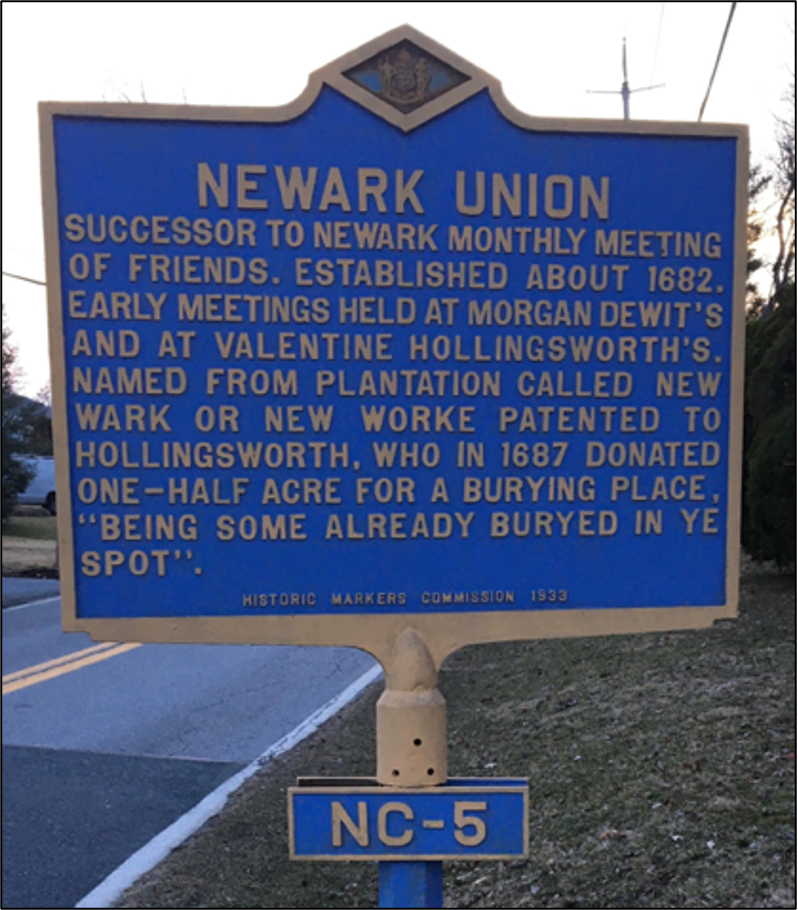
The properties are part of a land grant of 986 acres that Valentine Hollingsworth, an Irish Quaker, received from William Penn in 1682. The name, Newark, came from Hollingsworth who named his original plantation New Wark. The name morphed into New Worke and eventually Newark. This information is given on the historical marker located near the stop sign at the intersection of Newark Union Public Road and Baynard Boulevard. The marker was placed in 1933 and is the fifth historical marker to be placed in New Castle County. It’s a historic landmark itself!
In 2019, students from the University of Delaware Center for Historic Archetecture and Design (CHAD), led by Andreya Mihaloew, created the nomination packet for the Newark Union Church & Cemetery to be placed on the National Register of Historic Places. That position on the registry was granted in February 2020. Later that year, a second historical marker was placed close to the shared corner of the church and cemetery properties.
Newark Union Cemetery was established in 1687 by Valentine Hollingsworth who donated the first half-acre of land “being some already buryed in ye spot”, as indicated on the NC-5 historical marker. The Cemetery covers almost 2 acres, contains more than 1100 graves and is still active with 3-4 burials per year. There are 82 veterans from the Revolutionary War through Vietnam laid to rest there.
In 1935, descendants of Valentine Hollingsworth placed a memorial to him near the south entrance of the cemetery. Using Delaware Geneological Society records compiled in 1979, the actual location of Hollingsworth’s original gravestone was found. That stone has been raised and its position highlighted.
With help from several grants from the Distressed Cemetery Fund, over 225 headstones, footstones and corner plot markers have been raised, repositioned and/or repaired and cleaned and 95% of the stone wall around the perimeter of the cemetery has been repaired and repointed.
Volunteers have helped design and create a typical Victorian memory garden with benches and native plants, located under 2 old cedar trees in the old section of the cemetery.
Volunteers also designed and installed a Military Memorial in the center of the cemetery. Included is a flagpole and American flag donated and installed by members of one of the prominent Brandywine Hundred families whose generations of ancestors rest in the cemetery.
With a grant from the New Castle County Council Finance committee, all of our veterans have been honored with an American flag and a medallion which represents the war in which they served. The Finance Committee also provided funds for a memorial stone to be installed in the Military Memorial. This stone displays medallions of the 5 branches of the Armed Forces in which our veterans served.
The biggest event held yearly in the cemetery is the Wreaths Across America ceremony. This a national event held annually on the 2nd Saturday in December. During this ceremony, each veteran is honored with a ceremonial wreath.
N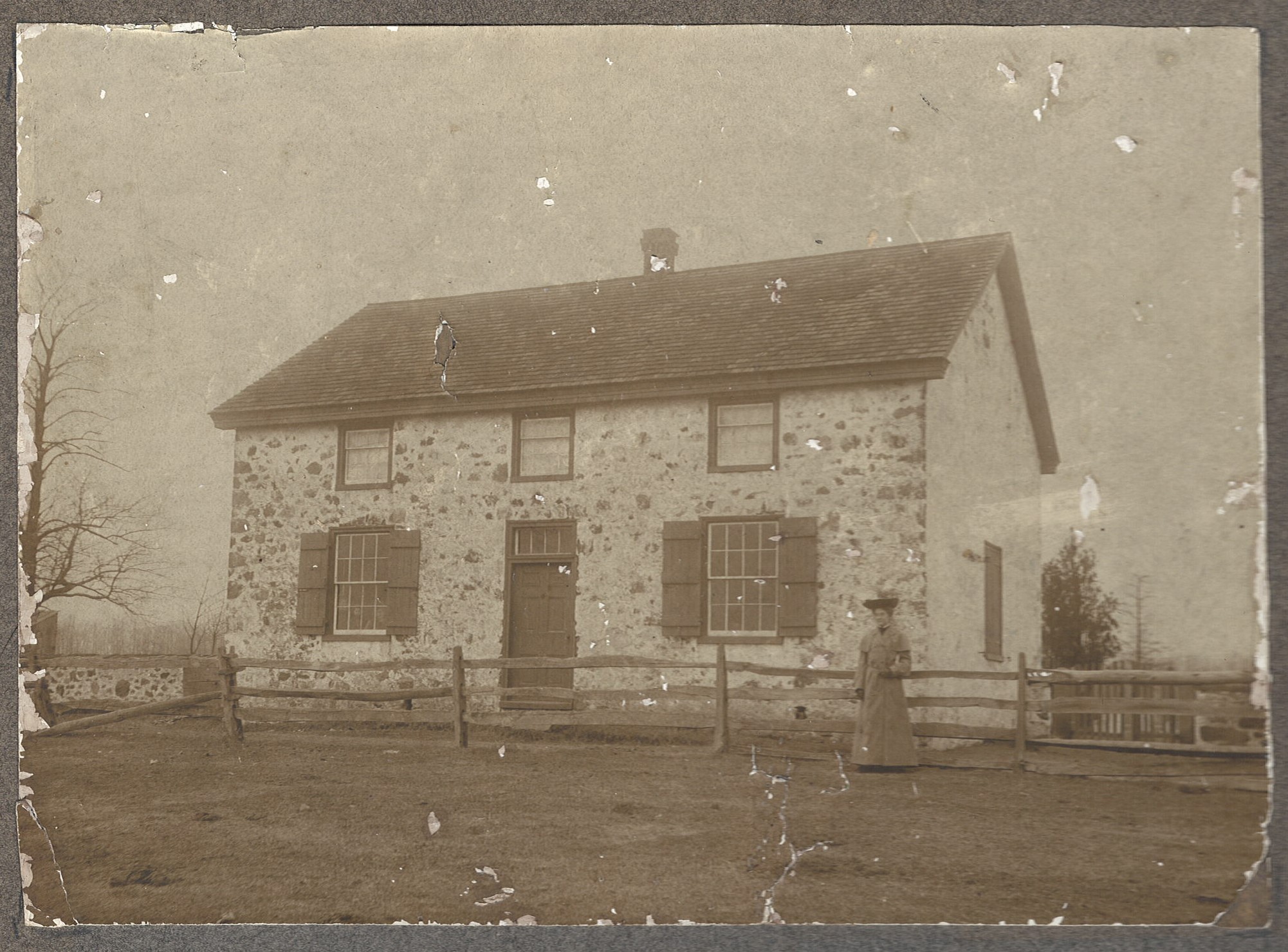 ewark Union Church was built in 1845 as a two-story fieldstone Quaker meeting house. The Union, or community, met there on Saturdays for exchange of goods and socializing, and then for worship on Sundays. By 1880, the Quaker meeting had been “laid down” and the congregation of the church was Methodist, although the church still belonged to the Union.
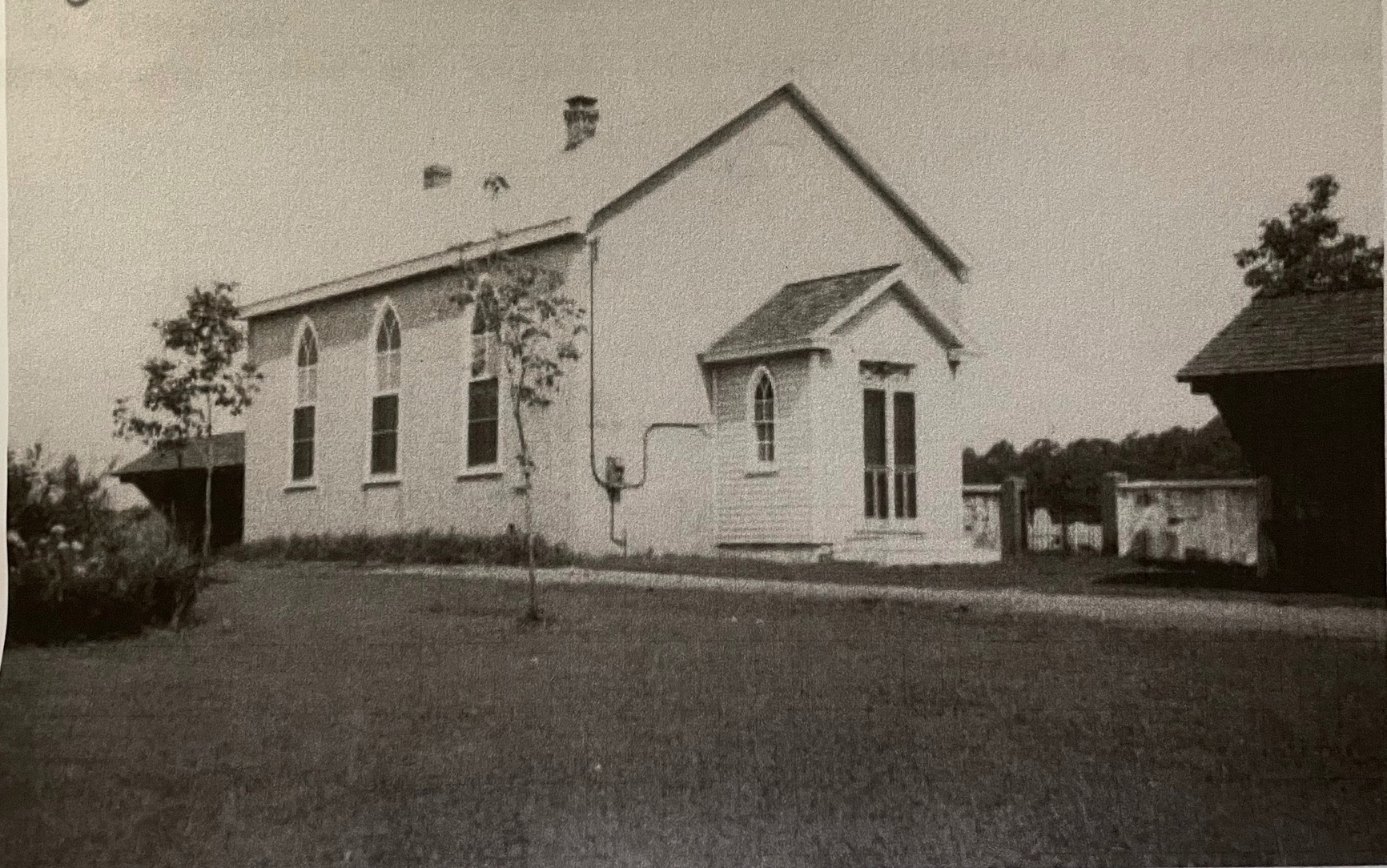 In 1906, the building was renovated to a Gothic Revival-style 1-story church with a stuccoed exterior, large lancet windows and a separate entrance and foyer. The Methodist congregation continued to worship there until 1951. That congregation outgrew the church and built a new building along Concord Pike, which is Aldersgate Methodist Church. A non-denominational congregation worshipped in Newark Union Church until 1970 when they dedicated their new church building as the Shellburne Bible Church located just down the hill. After that, the Newark Union Church building was closed and remained vacant for over 50 years.
In 2020, with a rekindled vision, the Board of Directors began restoration of the church to again open it up to the community for worship, weddings, funerals and community meetings. With grants and generous individual donations, in 2021, the exterior was restored. In 2022, after receiving additional grants and donations, the restoration of the interior was completed. That year, the Shellburne Bible Church congregation conducted a beautiful Christmas Eve worship service in the Church. In 2023, the building was made available for community meetings. The Brandywine Hundred Historical Society has been holding monthly meetings there with presentations of historical focus. That Spring, a small wedding was held there. Currently, the church holds museum-quality displays highlighting times of the veterans in the cemetery and life in the mid-to-late 1800s and early-1900s. Just last month, the Church had the honor of being the place for a funeral service for one of the former caretakers of the property. That brought the life of the church back to its original design and intent.
Since the site has such historic significance, the recent and current projects have been focused on broadening the interpretation of the history there and reaching further out to the community.
The church property has four buildings – the church, a carriage shed, a storage shed and a restroom.
As shown in this 1906 picture, there were two carriage sheds on the property, one in front and one in back of the church building. On the 1923 survey of the property, the position of the front “wagon shed” is shown, which was fairly large and extended out to the roadway. That carriage shed was torn down in 1952. The current carriage shed is a replica of the former with a much smaller footprint. It is an open three-sided shed with one of the sides being the stone wall of the cemetery. This is the typical design and construction of mid-1800 carriage sheds.
The storage shed is a 16’ x 20’ Quaker-style structure tucked away towards the southern and rear property lines. It holds the equipment used for maintaining the buildings and the property.
Next to the storage shed is a stand-alone restroom that has a composting toilet system. With funds from a grant award from the Delaware Community Foundation, a handicap-accessible walkway has been installed to provide safe access to the restroom for all persons.